
ORSKEY Dash Cam
A practical dash cam (1080p front, dual front and rear) that captures clear evidence on the road for insurance and disputes.
Dash cams vary in the things that matter: how much of the car they cover, how clear the footage is, whether they watch while parked, and how they store and log video. This guide walks through each so you can match a camera to your driving.
Resolution is quoted as 1080p (Full HD), 2K/1440p, or 4K, and more pixels mean clearer number plates, particularly at distance. The number of channels decides coverage: front-only, front and rear (dual), or 3-channel (front, rear and cabin). On multi-channel kits, the headline resolution usually applies to the front camera only; the rear and cabin are normally lower (often 1080p), so check the per-channel figures rather than assuming all match.
Good low-light performance matters as much as headline resolution, because many incidents happen at night; look for strong night-vision processing and a quality sensor. Field of view is measured in degrees (commonly 140 to 170); wider sees more lanes but can make distant detail smaller. A balanced wide angle around 140 to 160 degrees suits most cars.
Parking mode records or wakes on motion or impact while you are away, catching car-park knocks and hit-and-runs. It almost always needs a hardwire kit (often sold separately) wired to a fused circuit, with a low-voltage cut-off so it does not flatten the battery, because the 12V socket usually dies with the ignition. Built-in GPS stamps speed and location onto footage, adding valuable context to any claim.
Most dash cams need a microSD card and many do not include one; use a high-endurance card rated for continuous recording, in the largest size the camera supports, as ordinary cards wear out and cause dropouts. Fitting takes a few minutes: mount behind the rear-view mirror, route the cable around the headlining and down the pillar, and keep it out of the wiper-swept area in your eyeline.
A practical dash cam (1080p front, dual front and rear) that captures clear evidence on the road for insurance and disputes.

A practical dash cam (GPS) that captures clear evidence on the road for insurance and disputes.

A practical dash cam (2K/1440p front, dual front and rear, GPS) that captures clear evidence on the road for insurance and disputes.
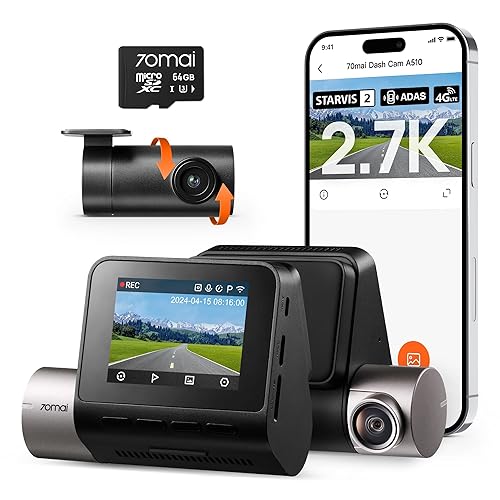
A practical dash cam (1080p front, dual front and rear, GPS) that captures clear evidence on the road for insurance and disputes.

A practical dash cam (2K/1440p front) that captures clear evidence on the road for insurance and disputes.

A practical dash cam (4K front) that captures clear evidence on the road for insurance and disputes.
Coverage (channels) and reliable, readable footage day and night. Resolution helps, but night performance, a good lens and a proper memory card matter just as much.
A capable front-and-rear kit with GPS is achievable under £100. Spending more buys better 4K, stronger night performance, 3-channel cover and refined parking features.
Our top pick is the ORSKEY Dash Cam (our score 9.6/10) - A practical dash cam (1080p front, dual front and rear) that captures clear evidence on the road for insurance and disputes..