Dash Cam Front and Rear Review UK 2026
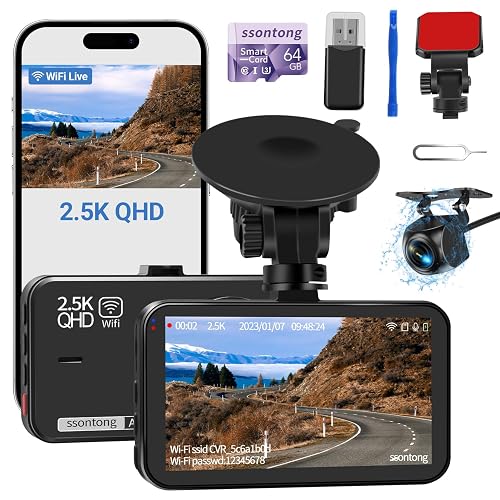
Quick verdict
Score: 8.3/10
Best for: Drivers wanting evidence and peace of mind, with front and rear cover
Not for: Anyone wanting a fully fit-and-forget device, since a microSD card and a little wiring are needed to get the best from it
Bottom line: A practical dash cam (2K/1440p front, dual front and rear) that captures clear evidence on the road for insurance and disputes.
Overall, this Other uses a clear split between its front and rear viewing capabilities, with the front positioned to capture more detail than the rear, while the dual coverage records both ahead and behind. The setup includes Wi-Fi app control, which can speed up viewing after trips. Buyers should confirm fit and mounting expectations.
Key specifications
| Spec | Detail |
|---|---|
| Front resolution | 2K/1440p |
| Rear resolution | 1080P |
| Night vision | Included |
| App control | Wi-Fi connection |
| Storage | 64GB included, up to 256GB |
Pros
- 2K/1440p front recording
- Dual front and rear
- Night vision for low-light driving
- Wi-Fi app for quick footage download
Cons
- A microSD card is often not included, so budget for a high-endurance one
- Continuous parked recording needs a separate hardwire kit
- Fitting and tidy cable routing take a few minutes, and footage needs occasional clearing
Video Quality and Resolution
Video quality is shaped primarily by the camera resolutions. The front unit records in 2K/1440p, while the rear records at 1080p, so the forward image should capture finer detail than the rear when both cameras are viewing the same scene. The resolution difference shows up in how easily plate text and lane markings can be read, particularly as vehicles move quickly. In low light, the product's "super night vision" is designed to improve usable visibility, but overall clarity still depends on conditions such as glare and headlight spill. Playback may be influenced by the settings and the viewing experience through the Wi-Fi app.
Front and Rear Coverage
With dual-front-and-rear recording, this dash cam is designed to capture what happens both ahead of and behind the vehicle. The front camera records in 2K/1440p, while the rear unit records in 1080p, so rear details may be less sharp. A dual-channel setup records each angle independently, and both views can be reviewed in the app over Wi-Fi. This provides stronger context during reversing or traffic stops, though blind spots can still occur where neither camera faces directly.
Night Vision
Night vision is handled by the dash cam's night vision feature, designed to improve visibility when light levels drop. It helps the front camera capture clearer road details after dark. The device also uses a Wi-Fi app connection, so the driver can check footage without removing the dash cam's 64GB card. Night vision performance depends on real street lighting, reflections and weather, so results vary between locations. For best consistency, the driver should confirm focus and framing, then review key clips through the app.
Parking Mode
Parking mode lets the dash cam keep recording, or at least monitor for events, while the car is parked. For this Other, the car camera design supports loop recording and an app connection via Wi-Fi, so the user can review what was captured once back in the vehicle. Parking mode can be useful for incidents that happen after the driver is away, but it may also trigger on many low-value events, so footage may need sorting later.
GPS and Speed Data
GPS and speed data can help turn dash cam footage into something more useful than just a video record, because it may show where the car was and how fast it was travelling at the time of events. With dual front and rear coverage, recorded incidents become easier to place in context, especially when the vehicle's movement matters. The cam can display speed alongside the timestamp, so viewers can compare driving behaviour before impact. Accuracy depends on satellite lock and signal conditions, and in tunnels or cities it may lag or miss updates. For UK use, drivers should verify readings against instrument speed.
Screen, App and Wi-Fi
The dash cam's screen support and wireless features affect how easily drivers set the camera up and review footage after an incident. This model is described as having a Wi-Fi app connection, with viewing and control handled through that phone app workflow. A screen can enable quick checks, including confirming the front 2K/1440p feed and the rear 1080p feed, without relying entirely on a phone. Wi-Fi also helps with clip sharing. Overall, the app adds convenience, while the exact on-screen details are not stated.
Installation and Ease of Use
Installing the front and rear dash cam is fairly straightforward, though the exact process varies by car trim and by cable routing so the leads do not interfere with airbags or driver controls. Mounting comes first, followed by neat routing of the front and rear cables to keep the rear camera aligned for 1080p recording. The 64GB card is inserted, and loop recording is enabled to help prevent the storage filling up. Power is then connected to the car, and the Wi-Fi app can be paired for quick setup so the driver can review the camera angles. If cable routes are tight, installation takes longer.
Who Is This Dash Cam For?
This front and rear dash cam suits drivers who want coverage in front and behind, with a 2K (1440p) front camera and a 1080P rear camera. Wi-Fi app connection supports viewing and setup. It is aimed at night driving, with night vision, and it offers loop recording with a G-sensor for automated saving. A 64GB card is included for quick setup, while support up to 256GB suits longer recording sessions. Buyers looking for features beyond what is specified may find it disappointing.
Where to Buy in the UK
Finding a front-and-rear dash cam that matches UK driving needs is easiest when shoppers follow the listing closely against the stated features, including 2K/1440p front recording, 1080p rear recording, dual front and rear coverage, night vision, and Wi-Fi app connection. In the UK, shoppers can browse major retailers such as Amazon UK, John Lewis, Currys, AO, and Argos, then cross-check the product title details and the included memory card, which is 64GB as stated. They should also confirm loop recording, G-sensor, and maximum support for 256GB, since these details affect everyday use. If any of those items are missing or unclear, choosing elsewhere can reduce frustration.
Frequently Asked Questions
Is the Other worth it?
A dash cam like the Other pays for itself the first time you need evidence after an incident - it can speed up insurance claims and protect you against false blame. Check the current Amazon UK price, as it changes often.
Is the video quality on the Other good enough to read number plates?
The Other records in 2K/1440p front, which is sharp enough to capture number plates clearly in good light at a sensible distance. Reading distant plates is harder at night or at speed.
Is the Other an MOT failure or illegal in the UK?
A dash cam is not illegal and not an automatic MOT failure, but it must not obstruct the driver's view - fit it behind the rear-view mirror or low on the windscreen, outside the area swept by the wipers in the driver's eyeline, and route the cable tidily.
What are the downsides of the Other?
A dash cam needs a microSD card (often bought separately), takes a few minutes to fit and wire, and continuous recording while parked usually needs a separate hardwire kit. Footage also needs occasional checking and clearing.
Does the Other record front and rear?
Yes - the Other is a dual front and rear system, capturing the road ahead and behind. The rear camera connects by a cable run to the back of the car.
Does the Other come with a memory card?
Many dash cams do not include a microSD card, so check the listing and budget for one if needed. Use a high-endurance card rated for continuous recording, and the largest size the camera supports.